Alewijnse has signed a contract with French shipbuilder Piriou to deliver the electrical system integration on board four more new sail cargo vessels with hybrid propulsion. The Phenix class has been developed by shipping company TransOceanic Wind Transport (NEWTOWT).
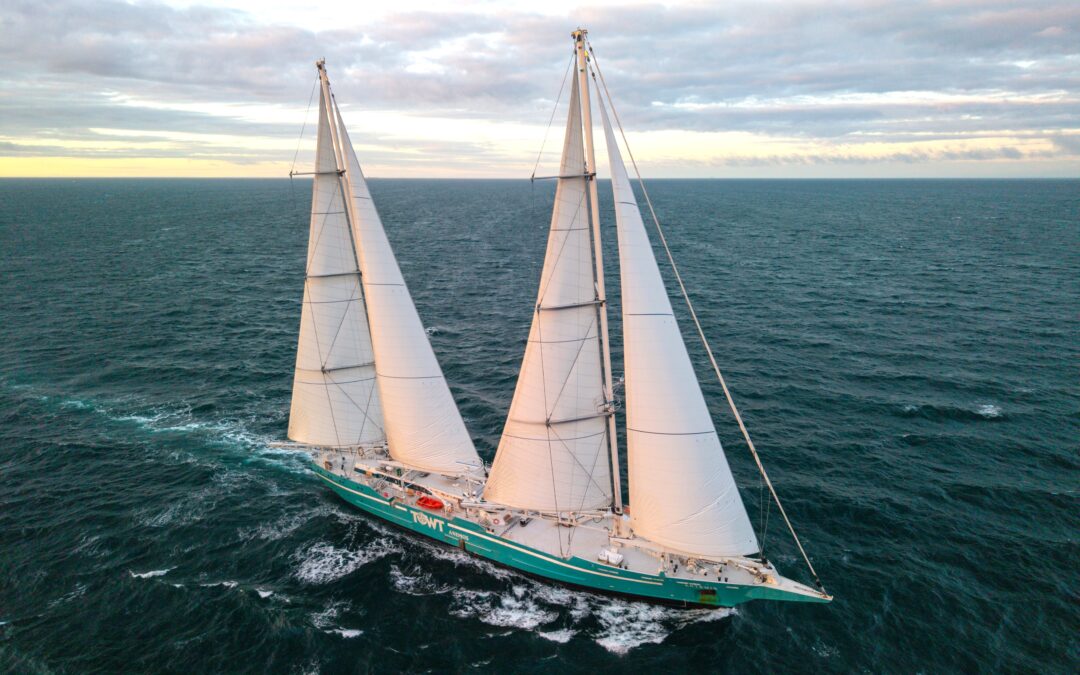
Earlier, Piriou and Alewijnse completed similar projects for the first two vessels, Anemos and Artemis, which were built in Romania and France; and Vietnam respectively. Together with the new vessels, these are currently the largest sailing cargo ships in operation that utilises automated soft-rigging sails derived directly from ocean racing technology.
The French company NEWTOWT (formerly TOWT) is one of several companies that are revisiting the idea of sail-powered cargo vessels, supported by a French government grant. Working with Piriou, NEWTOWT has developed the Phenix-class sailing ship for freight transport across the Atlantic and Alewijnse was selected to integrate the complex electrical systems aboard these innovative vessels.
Also read: Alewijnse delivers electrical works for Allseas’ Solitaire
Hybrid electric sailing tech
The 80.36-metre-long Phenix-class employs a hybrid electric sailing technique. The vessels operate on a wind-first philosophy, meaning they are primarily propelled by sails. As the vessel moves through the water, the propeller rotates and generates electricity, recharging the batteries when needed. This is a process known as hydro-generation.
Electrical energy is only used when manoeuvring in and out of harbours and as auxiliary power in low-wind conditions. Fossil fuel is reserved solely as an emergency backup when the electrical energy supply is exhausted. Together these systems reduce CO2 emissions by as much as ninety per cent.
On board, advanced navigation tools, including hydraulic and wind sensors, enable near-full automation of the sails to ensure that they deliver maximum efficiency. The parallel hybrid propulsion and power generation systems also feature additional new functionality.
Also read: Alewijnse lands Port of Rotterdam fleet maintenance
Advanced system integration
‘All of this technology requires careful system control and integration, which demands specific expertise,’ says Alewijnse Project Manager Ionut Melescanu. ‘We were therefore invited to handle the innovative, advanced system integration on this unique prototype vessel, overseeing the programming and functionality of all electrical systems.’
He adds: ‘Our geographical presence and local content knowledge are other significant advantages. The hull of the first ship, Anemos, was constructed in Giurgiu, Romania, with final outfitting and commissioning completed in Concarneau, France. The second vessel was entirely built at the Piriou shipyard in Ho Chi Minh City, Vietnam, where the next four vessels will also be built.’ For over twenty years, Alewijnse has had its own facilities in both Romania and Vietnam.
Picture: One of the two existing sailing cargo vessels, Anemos (photo supplied by Alewijnse).