From the magazine – The most recent sector data provides insight into the recent developments in the superyacht sector. The numbers show a trend of bigger ships and Dutch growth.

This article was first published in our October 2026 issue as part of a yachts special. It was written bij SWZ|Maritime editor Bas Lenferink.
The recent Global Order Book 2026 of Boat International shows a slight decline in orders and yachts built. As of January 2026, 1093 yachts of 24 metres or more were ordered or being built. This represents a decrease of 3.95 per cent in comparison to last year and a decrease of 9.14 per cent since the 2023 peak after Covid. The total length of the yachts being built stands at 44,637 metres, with an average length of 40.8 metres.
The decline in projects does not lead to a decline in gross tonnage (GT). The global order GT rose with four per cent to 602,092 GT. An average yacht got 8.7 per cent bigger last year with an average GT of 551. At the same time, designers are optimising the volume below the regulatory limit of 500 GT. Above 500 GT, a lot of extra regulations apply, so a growth in the category just under 500 GT is seen.
The number of yachts on order in the biggest segment is growing as well. Boat International states that 67 yachts with a length of more than 76 metres are being build, of which 26 are above 100 metres long. These 26 yachts have an average volume of 6150 GT.
Also read: SWZ|Maritime’s October 2026 issue: Of cows and ketches
The top yacht builders
Italy remains market leader based on the number of yachts built with 568 projects and a total length of 22,299 metres. This is half of all global newbuilds. Turkey comes second with 141 projects and a total length of 6315 metres. The Netherlands comes third with 66 projects and a total length of 4341 metres. Notably, the average length of yachts built in the Netherlands is 26.2 metres greater than the Italian average of 39.3 metres.
The number of yachts built on speculation has risen slightly to 31.8 per cent. This is considerably higher in Turkey where 41.8 per cent of the yachts is built on speculation. Even bigger is the contrast with the Netherlands, where only 22.7 per cent is built on speculation. Building on speculation can for instance be done by yards to offer ready solutions for clients or to keep the yards operating with a full order book.
Also read: Behind the scenes of Polish yacht building
Dutch built
The Dutch market focuses on large custom yachts. In line with the global trend, the Dutch yachts are getting bigger. The average superyacht built had a length of 65.8 metres and the average gross tonnage rose by fifteen per cent to 1633 GT. This number is highly influenced by big projects by Feadship – eighteen yachts with a total length of 1390 metres – and Oceanco – one yacht with a volume of over 11,000 GT on one 130-metre project.
The low number of yachts built on speculation – just 22.7 per cent – shows that Dutch yards are popular and trusted. The superyacht sector is relatively small by number of companies. There are approximately fifteen companies that produce yachts in the Netherlands and globally, there are about 190 yards. The Dutch yards deliver almost completely for the export market.
The Maritime Monitor 2025 by the Dutch Maritime Network (Nederland Maritiem Land, NML), published in December 2025, indicates that the Dutch yacht building sector is stable. Direct employment of these companies rose by 6.1 per cent in 2024 to 3320 jobs. Another 4283 people are employed indirectly, leading to a total of 7603 jobs related to the yacht builders. In the same year, the sector’s turnover rose by six per cent to € 1.88 billion. This led to a direct added value to the economy of € 260 million, 7.5 per cent more than in 2023, and a total added value of € 570 million.
Beyond direct economic contribution, the Dutch yards increasingly support research and development and technical education in the Netherlands, according to NML. Yards work together and invest in pilots and the development of technologies in collaboration with the TU Delft and MARIN. The focus in these projects lays mainly on alternative fuels, circular design and new methods of propulsion.
Robust sector
The data reflects the current state of business and the short term developments. Long term conclusions are hard to draw. Whether the trend of bigger ships will continue is hard to predict. Just as that it is unclear how the sector will develop over the coming years. Nonetheless, the robustness of the Dutch yacht building industry within the global sector is evident.
Also read: Superyacht Zero emerges from Vitters’ building hall
Acknowledgement
This article is based on data from the “Global Order Book 2026” of Boat International and the Maritime Monitor 2025 by the Dutch Maritime Network (Nederland Maritiem Land, NML).
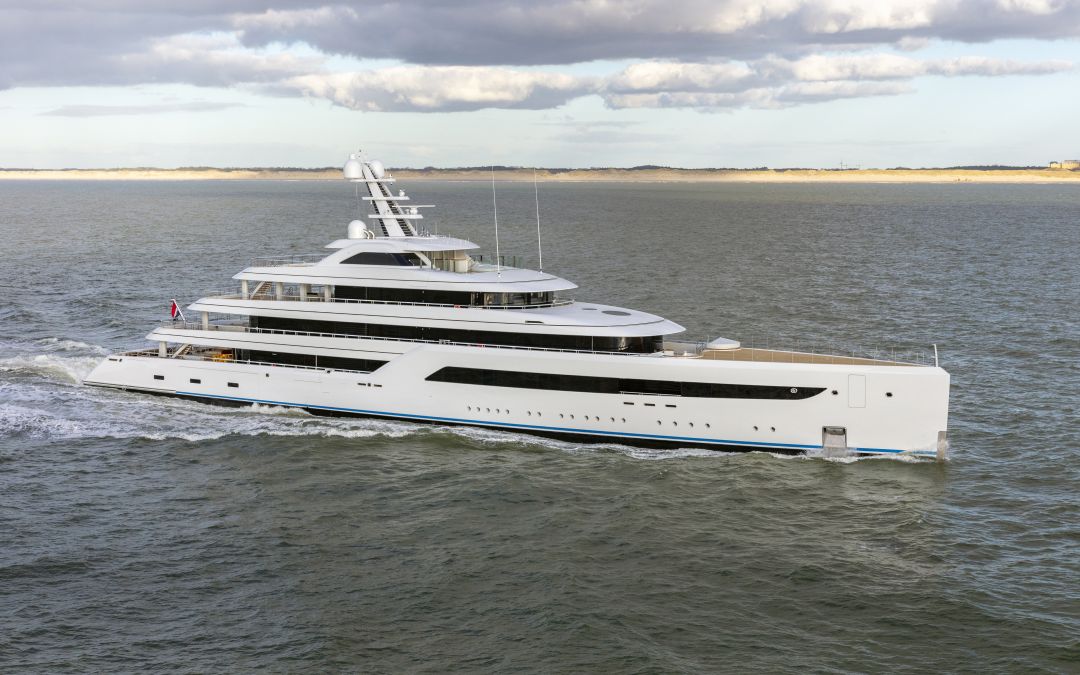
Picture: 88.38-metre Zen was built by Feadship and delivered in April 2021 (photo Flying Focus).