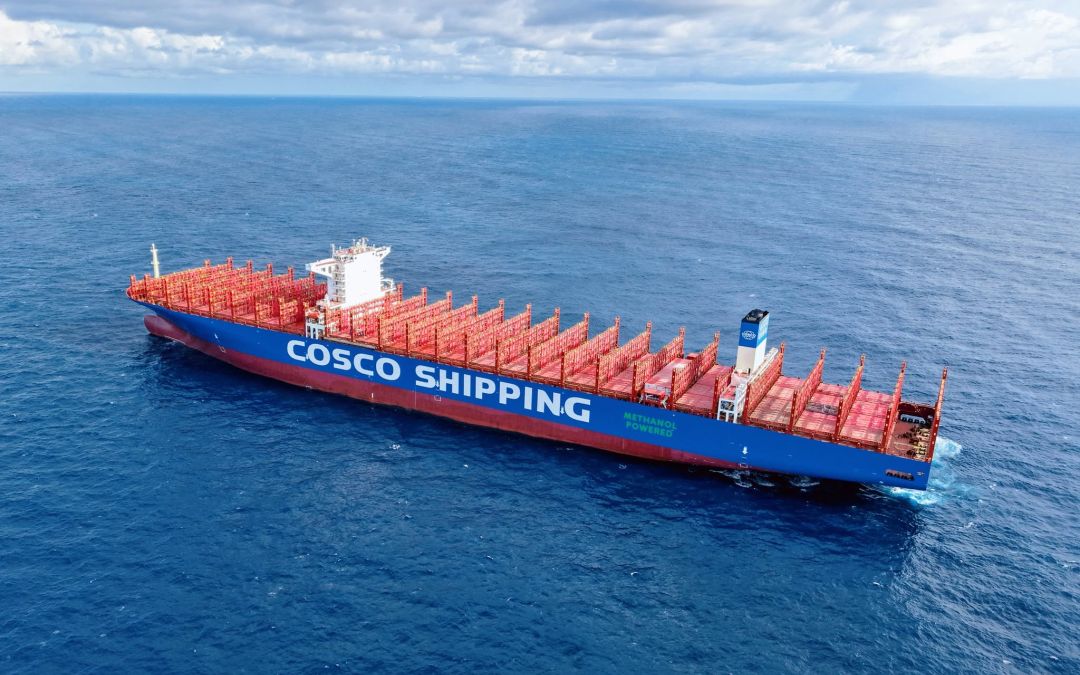
Retrofitting at scale: The first methanol mega ship conversion
From the magazine – The retrofitting of a 20,000-TEU container vessel to run on methanol was successfully completed in China in 2025. With valuable lessons already learned, this can pave the way for further conversion of the global fleet to low-greenhouse gas (GHG)...
First of series Damen CSD600 at work in Indonesia
In Indonesia, a Damen CSD600 has started operation. The cutter suction dredger is the first of a comprehensive new dredger range. It was transported from Rotterdam, the Netherlands, to Indonesia as deck cargo on a heavy-lift carrier. The stationary dredger, which has...
MOL launches Japan’s first methanol-fuelled coastal tanker
MOL Coastal Shipping held a naming and launching ceremony for a newbuild coastal tanker, the Daichi Meta Maru, on 4 July. It is Japan’s first domestic coastal vessel to use environmentally friendly methanol fuel. MOL Coastal Shipping is part of Mitsui O.S.K. Lines...

MIT: Health risks in switching ships to ammonia fuel
Ammonia could be a nearly carbon-free maritime fuel, but without new emissions regulations, its impact on air quality could significantly impact human health. This follows from a study by the Massachusetts Institute of Technology (MIT). One potential solution to...

‘Tanker sanctions have had no effect on Russian oil exports’
Backlisting vessels by the OFAC and the European Union for breaching the Russian oil price cap has been successful in removing them from the fleet of ships exporting Russian crude oil, but it has had no impact on overall Russian crude oil exports, with more new ships...
Bunkering new fuels and Rotterdam’s role
From the magazine - Conventional bunker fuels that the maritime industry has been using so far are a fossil-based product from the refining industry. With new, alternative, fuels entering the market, this will no longer be the case. What is the Port of Rotterdam's...

TNO: China’s wind and electrolysis tech threatens Europe
China occupies an increasingly dominant market position in offshore wind technology and electrolysis for green hydrogen production. To reduce strategic dependencies, Europe can take action. The geopolitical consequences could be far-reaching and have a direct impact...

FuelEU penalties will hit these ship segments hardest
The financial impact of FuelEU Maritime is focusing the minds of shipping companies as they face potential penalties for non-compliance with greenhouse gas (GHG) intensity reduction targets. OceanScore has identified those segments set to be hit hardest. Vessels in...

Perfect storm fuelled by record container shipping demand
Global demand for ocean freight container shipping hit an all-time record in May amid soaring spot rates and severe port congestion. The 15.94m TEU transported by ocean in May beats the previous record of 15.72 TEU set in May 2021, according to data released by Xeneta...

Nuclear ships: Long-lasting, reliable and emissions-free
Nuclear power could transform the maritime industry with emissions-free shipping, whilst extending the life cycle of vessels and removing the uncertainty of fuel and refuelling infrastructure development. Yet, regulation and safety considerations must be addressed for...

ECSA and ETF launch Seafarers Go Digital
The European Community Shipowners’ Associations (ECSA) and the European Transport Workers Federation (ETF) have joined forces to launch the "Seafarers Go Digital" initiative. This project is to support shipping and seafarers in the digital transition. Seafarers Go...
PARTNERS