
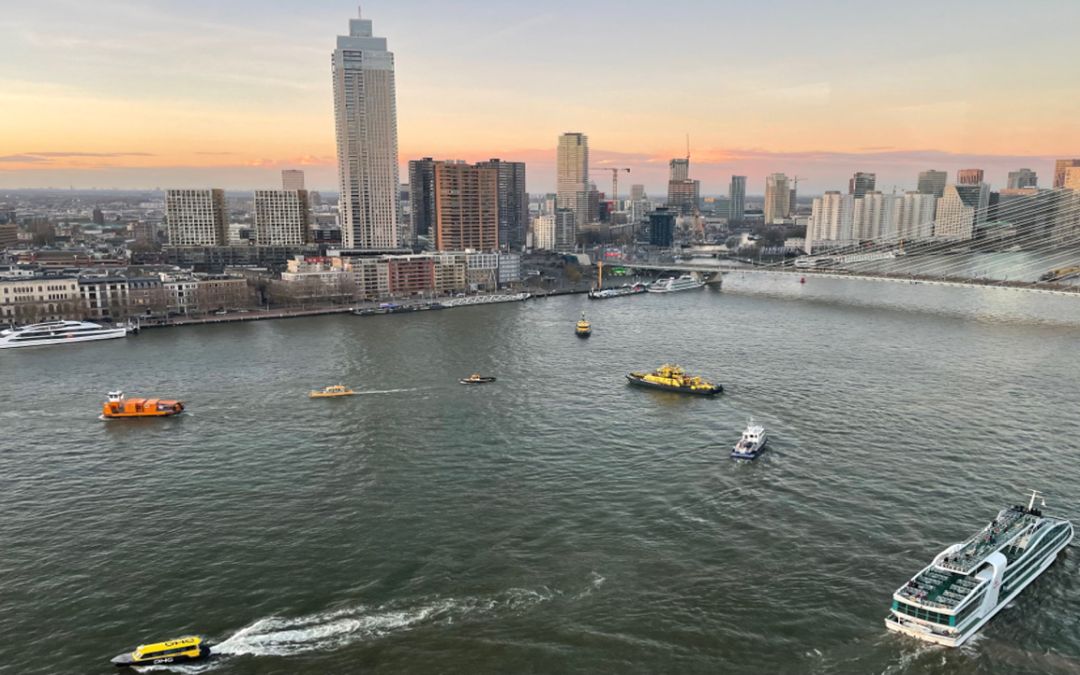
More than six months after new navigation rules were introduced on the Nieuwe Maas, vessel traffic data shows that ships in the Erasmus Bridge zone in Rotterdam are travelling noticeably slower than before the measures came into effect on 1 April 2026. No incidents or near misses have been recorded in the area since their introduction.
The new rules followed recommendations from the Dutch Safety Board and a nautical risk assessment. Their aim is to create a calmer, clearer and more predictable traffic situation in one of the busiest and most complex waterways in the Netherlands. Inland cargo vessels, water taxis, the Waterbus, recreational craft, sightseeing boats and other passenger vessels all use this stretch of water every day, often at different speeds and with different sailing patterns.
‘The results show that the measures are achieving what they were introduced to do: improve safety on the Nieuwe Maas,’ says René de Vries, Harbour Master of Rotterdam. ‘AIS data shows a clear reduction in higher vessel speeds. At the same time, there have been no incidents or near misses in the area since the rules came into force. We also see that the vast majority of vessels comply with the new rules.’
Also read: Speed limits Nieuwe Maas river from 1 April 2026
Comparing before and after
Monitoring is based on a large volume of AIS data, which makes it possible to visualise vessel speeds and traffic patterns. Comparing the situation before and after the measures were introduced provides a detailed picture of their impact on vessel traffic.
Speeds have not been the only thing to improve. Vessel movements in the area also show a positive trend. Traffic flows have become clearer, particularly around the Spido and Waterbus landing stages on the Willemskade.
The requirement for vessels to keep to the starboard side of the waterway has improved the separation of opposing traffic flows. Analysis shows that vessels now concentrate more on the correct side of the waterway and that fewer crossing movements take place in this high-risk section of the Nieuwe Maas. This has made traffic calmer and more predictable.
Also read: Fewer collisions in Port of Rotterdam, focus on speed limits
The rules
A reminder of the rules: since 1 April, a speed limit of 20 kilometres per hour has applied in the Erasmus Bridge zone, which runs from the Waterbus landing stage on the Willemskade to the radar tower on the Boompjes. A speed limit of 50 kilometres per hour applies in the approach areas to the zone, between Sint Jobshaven and Nassauhaven.
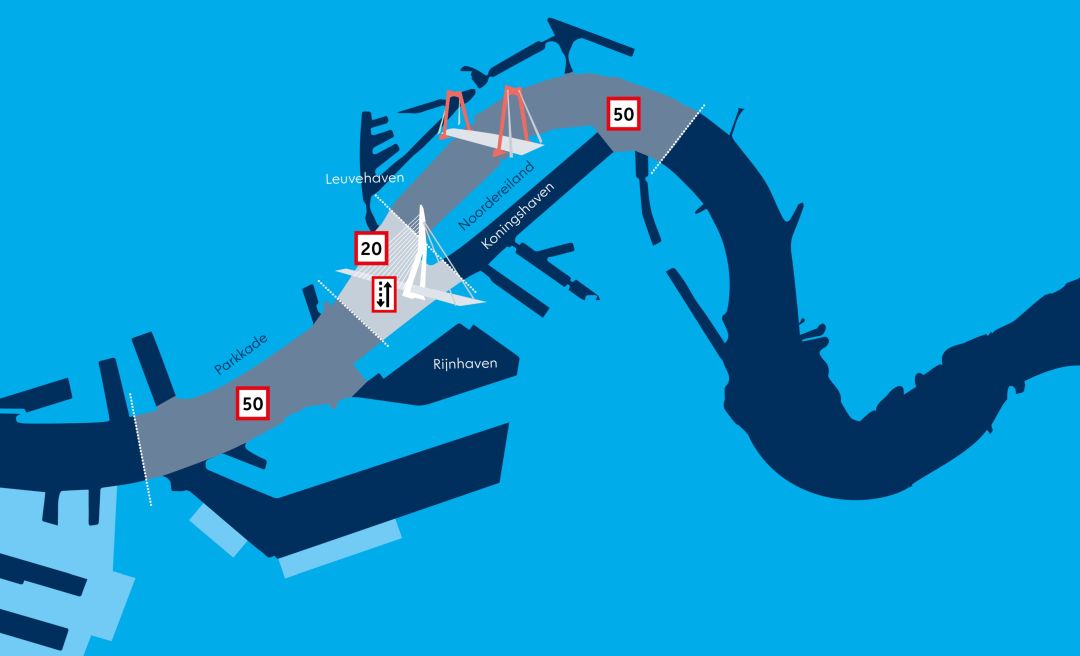
Vessels must also keep to the starboard side of the waterway, and turning around is prohibited. The rules were introduced to improve traffic flow and visibility in an area where different types of vessels, travelling at different speeds and following different patterns, converge.
Round-table discussions
The introduction of the new navigation rules involved extensive consultation with representatives of commercial shipping, passenger transport and recreational boating. The Harbour Master Division continues to engage with users of the Nieuwe Maas following their introduction.
Regular round-table discussions provide an opportunity to share experiences and assess how the measures work in practice. These meetings offer valuable insights into the daily use of the waterway and help identify any issues that may arise. The Harbour Master Division will continue to monitor the effects of the measures closely.
Picture (top): The measures have improved the flow of traffic in the busy area around the Erasmus Bridge (photo Port of Rotterdam Authority).
Also read: Rotterdam Harbour Master announces Nieuwe Maas speed limit