Wind is set to become one of shipping’s most important sources of energy. To accelerate this, Wallenius Marine, KTH, RISE and AlfaWall Oceanbird are launching a new research project to build new knowledge on how vessels can be designed to make the most of modern wind propulsion systems.
As industry looks for solutions to reduce emissions, interest in wind-powered propulsion is growing. For Wallenius Marine, wind is not simply a complement to the ships of the future, but a central part of tomorrow’s energy system at sea.
Also read: ABB and Wallenius Marine establish Oversea JV
Aerodynamic design
To realise this ambition, the research project WinPrOVeDD (Wind Propulsion Oriented Vessel Deck Design) is now being launched. Supported by the Swedish Energy Agency, the project will investigate how vessel design affects the efficiency of wing sails and other wind propulsion systems. Previous research shows that conventional vessel designs can significantly limit performance, while a more aerodynamic design can deliver substantial efficiency gains.
Urban Lishajko, Head of Ship Design, Newbuilding & Innovation at Wallenius Marine: ‘We firmly believe that wind will once again become a primary source of energy for shipping. To make that possible, we need to consider the vessel and its propulsion system as a whole. We need to design the ships of the future around the wind, rather than simply adding wind technology to vessels developed for a fossil-fuel era.’
Also read: Oceanbird completes sea trial with Wing560 on car carrier
Open-access design guidelines
The research project will run from 2026 to 2029 and combine advanced simulations with wind tunnel testing to identify the vessel designs that can make the most effective use of wind energy. The results will be published openly as design guidelines that can be used by ship designers, shipyards and shipowners worldwide.
The aim is to generate new knowledge that will enable the development of vessels in which wind provides a significantly greater share of the energy required than it does today, thereby reducing dependence on fossil fuels and other fuels.
Wallenius Marine leads the research project, with KTH, RISE and AlfaWall Oceanbird as project partners. The total project budget is approximately SEK 9.4 million (about EUR 840,000), of which approximately SEK 5.6 million is provided as research funding by the Swedish Energy Agency.
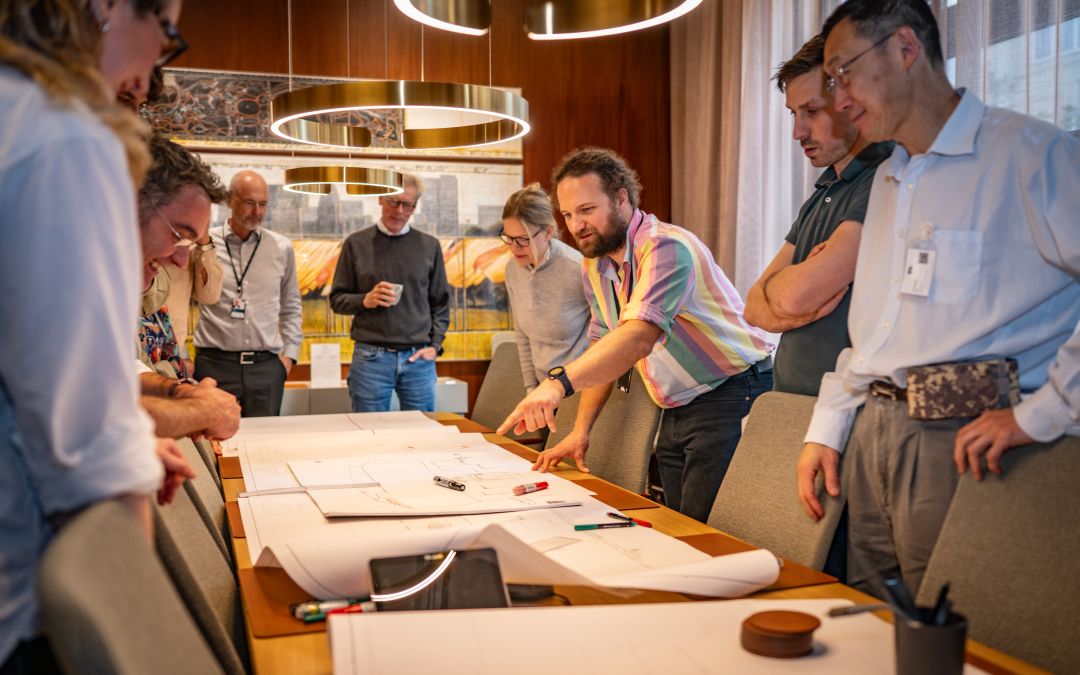
Picture: The project team during a discussion about wind-powered ships (photo Karin Röse).