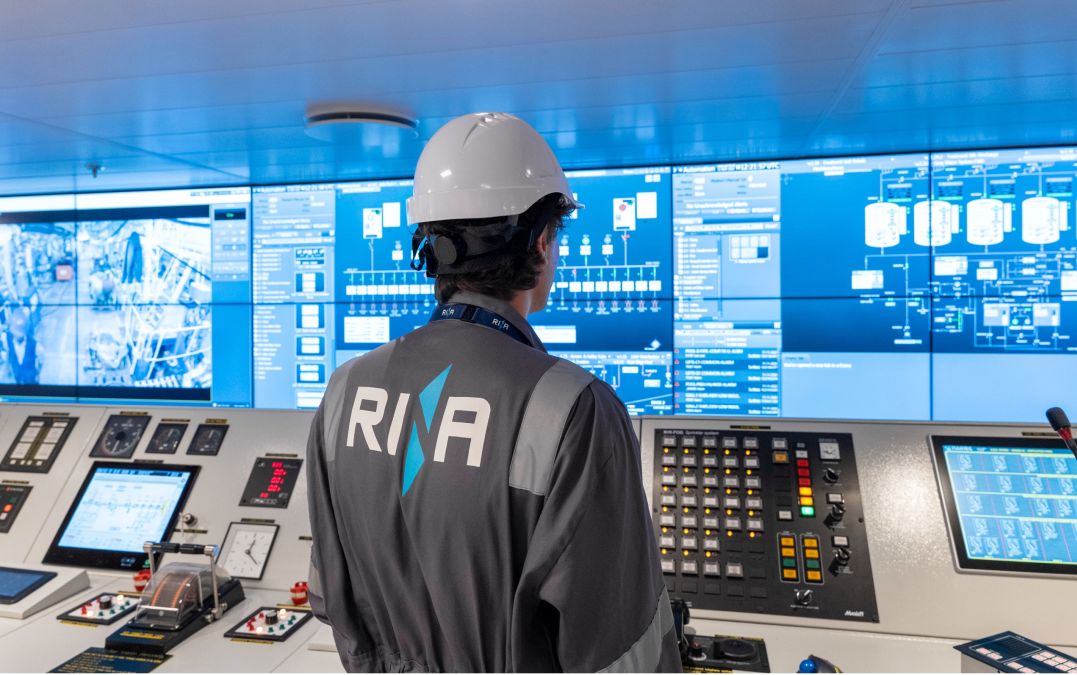
RINA is introducing Mermaid, a future-ready propulsion concept designed to reduce fuel consumption and emissions while improving operational resilience. The flexible system is intended to help shipowners adapt as the maritime industry’s decarbonisation pathway evolves.
RINA’s Mermaid propulsion concept turns a vessel’s efficient two-stroke main engine into a source of onboard electrical power. This reduces reliance on auxiliary engines. The architecture combines a shaft generator, propeller shaft clutch and battery energy storage, while remaining fuel agnostic.
Also read: RINA Maritime Innovation Award for Eco Boss Cap
Main engine and batteries
When a vessel arrives in port, the propeller is disconnected while the main engine continues generating electrical power. Rather than relying on auxiliary engines to meet onboard demand, Mermaid enables the main engine to supply electrical power directly or charge the batteries.
Once charged, the batteries provide onboard power. This allows the main engine to operate more efficiently while reducing fuel consumption, emissions and operating costs.
Also read: RINA acquires Finland-based Foreship
Matching real operating conditions
Mermaid also supports a more optimised propulsion system. Due to slow steaming, many vessels spend much of their operating life operating well below the speeds they were originally designed to achieve.
By combining aux engines with battery energy storage in a hybrid propulsion scheme, the concept enables propulsion power to be better matched to real operating conditions while maintaining operational flexibility and safety. This reduces the need to install excess engine capacity while providing an additional source of electrical power that enhances resilience during critical operations.
Also read: Newcleo, Fincantieri and RINA look into feasibility of nuclear marine propulsion
Towards a detailed design
According to RINA, the concept can cut fuel consumption by more than 1,000 tonnes per year in some applications. It is designed to deliver immediate efficiency gains while allowing shipowners to adapt as fuels, technologies and regulations evolve. The concept can be applied to tankers, bulk carriers and container ships and is now being developed into a detailed design following positive feedback from shipowners and shipyards.
Picture by RINA.