
Europe’s ambition to install 300-400 GW of offshore wind by 2050 cannot be realised without scaling up the marine contracting sector — the offshore construction fleet that builds, installs, and maintains the infrastructure powering the clean energy transition. These are the implications of a new report commissioned by the International Marine Contractors Association (IMCA) and conducted by PA Consulting.
The economic impact study — covering the EU27, UK, and Norway — finds that the sector is expected to generate more than EUR 45 billion in direct gross value added (GVA) in 2025 and support over 220,000 direct jobs, while the GVA-per-worker in marine contracting is more than 2.5 times the European average, highlighting the high-value impact of the sector.
Including indirect and induced impacts, PA Consulting found that the marine contracting sector will contribute more than 490,000 jobs, and EUR 80 billion in GVA in 2025.
This is the first comprehensive study of its kind into marine contracting’s economic and strategic role. The study provides a detailed picture of a sector that remains under-recognised — despite being central to Europe’s clean energy infrastructure — while also highlighting a growing tension around future wind energy targets.
Also read: ‘Shortage of offshore installation vessels looms by 2025’
Energy and security
The marine contracting sector is responsible for installing and maintaining offshore wind turbines and all offshore energy infrastructure, including laying subsea cables, deploying power interconnectors, enabling carbon capture and storage (CCS), decommissioning ageing infrastructure, and safeguarding critical energy assets. Its capabilities go beyond vessels alone — including remotely operated vehicles (ROVs), advanced diving operations, survey and trenching equipment, and highly specialised engineering teams that operate in the world’s most challenging offshore environments.
The sector also plays a critical role in improving energy security by reducing Europe’s reliance on imported fossil fuels. By protecting European energy supply, interconnector, and telecoms infrastructure, the marine contracting services sector improves European security in an increasingly volatile world, making Europe more resilient to geopolitical and climate threats.
Offshore wind targets require bigger fleet
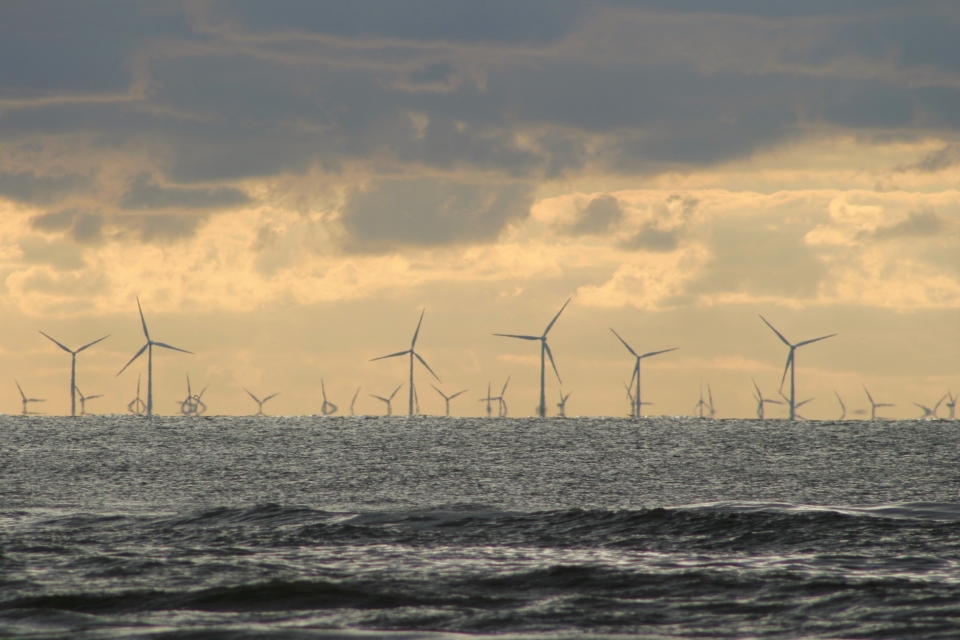
To meet its 2050 offshore wind targets, Europe will need to deploy more than 10,000 offshore wind turbines. The sector has the potential to enable the installation of the turbines required to meet offshore wind capacity targets in the EU, UK, and Norway, with the right commercial and regulatory environment.
However, this demands a rapid and unprecedented expansion and scale-up of heavy-lift vessels, specialist equipment, and trained offshore crews, as well as upgraded port infrastructure. While each heavy-lift ship currently takes four to six years to build, few such vessels are on order. Fleet shortages, fuel regulation uncertainty, and delayed investment decisions are leaving the sector unable to scale. Furthermore, with vessels expected to operate for twenty years or more, companies need long-term policy certainty before committing to major investments.
Also read: Holland Home of Wind Energy to merge with NMT-IRO
Certainty key for investments
Between 2025 and 2030, offshore wind installations have the potential to offset up to 3100 million tonnes of CO2e — a figure equivalent to removing more than 650 million cars from the road for one year.
‘Europe’s energy transition depends on the capabilities of marine contractors — and our members are ready to partner with EU policymakers to deliver it,’ says Iain Grainger, CEO of IMCA. ‘We need joined-up thinking and long-term policy certainty to scale up capacity and meet future demand. The sector is ready — but it cannot do this alone.’
‘Marine contractors are ready to invest,’ adds Lee Billingham, IMCA Director of Strategy. ‘But you can’t greenlight a EUR 250 million to EUR 3 billion vessel when regulators are pushing rapid decarbonisation — from the EU Emissions Trading Scheme (ETS) to the IMO’s net zero framework for shipping — without clarity on which fuels will be available or where. Port access, fuel infrastructure, and regulatory alignment all need to move in sync. To deliver its targets, the EU and European governments need to work closely with the marine contracting sector to provide the certainty required for long-term investment.’
Policy momentum
IMCA commissioned the Economic Impact Report to inform the drafting and the roll-out of several EU initiatives, including the Action Plan for Affordable Energy, the Action Plan on Cable Security, the EU Ocean Pact, the EU Ports Strategy, the EU Industrial Maritime Strategy, the Energy Grids Package and the review of the EU ETS. IMCA will use these initiatives to engage and brief policymakers on the urgent need for:
- Designation of marine contracting as of strategic importance, recognising its role in providing and maintaining critical infrastructure,
- Targeted investment incentives to accelerate new vessel builds, modernise existing fleet capacity, and expand port infrastructure – including EU-supported financing tools, state aid alignment, and priority access to funding streams such as CEF and the Innovation Fund,
- Aligned training and visa frameworks for skilled offshore labour,
- A strengthened European offshore supply chain – including evaluating future shipbuilding and vessel integration capacity to meet growing demand and retain high-value activity within the EU.
‘If Europe doesn’t act soon, others will,’ warns Billingham. ‘Additional capacity will be needed globally — but growing Europe’s own capability is vital for strategic autonomy, resilience, and ensuring the energy transition delivers jobs and value here at home.’
Also read: The Port of Den Helder, a strategic maritime hub
A critical industry hitting its limits
The report lays out the size and significance of the sector:
- More than EUR 45 billion in direct gross value added (GVA) annually,
- More than 220,000 direct full-time equivalent jobs, rising to nearly 490,000 when supply chain and induced effects are included,
- EUR 35 billion in additional indirect and induced Gross Value Added,
- GVA per worker in marine contracting is over 2.5 times the European average — a productivity premium of around €126,000 per job,
- The sector contributes more than EUR 15 billion in taxes and around EUR 1 billion in visa fees to European governments annually.
‘Marine contractors are at the frontline of Europe’s green transition,’ states Grainger. ‘Our sector already delivers tens of billions in value and hundreds of thousands of skilled jobs. Yet Europe’s energy security and climate goals demand we build vastly more offshore infrastructure – and fast. To meet that challenge, policymakers must recognise marine contractors as key providers of strategic infrastructure. We need clear, consistent support for new shipyards, cables and crews, or risk falling behind.’