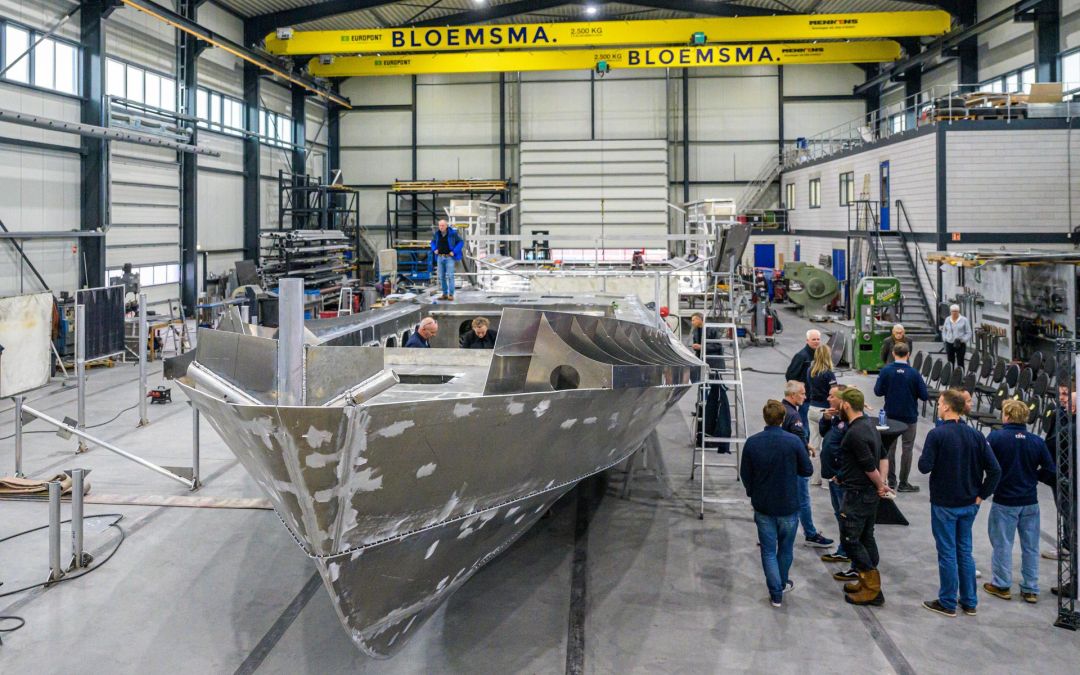
Construction of the the Royal Netherlands Sea Rescue Institution’s (KNRM) new generation of large lifeboats began in Makkum on 31 October with the keel-laying of the Prins Johan Friso. It is the first of thirteen new vessels, each more than 19 metres long, that will replace the existing fleet.
Petra Lugtenburg, Director-General for Civil Aviation and Maritime Affairs at the Ministry of Infrastructure and Water Management, performed the official ceremony by placing a coin on the vessel’s keel. This centuries-old maritime tradition symbolises a safe voyage for the ship and its crew.
The Prins Johan Friso is the first lifeboat in the new Nh1816-2 class. This class is a further development of the KNRM’s existing Arie Visser class and the Nh1816, which entered service in 2014. The new lifeboats are designed for rescue operations at sea, including in the most severe weather conditions.
Also read: KNRM: 2025 busier rescue year than 2024
A tangible start
Construction of the thirteen lifeboats is being undertaken by Dok & Scheepsbouw Woudsend BV. The first sections of the Prins Johan Friso are being assembled at Bloemsma Aluminiumbouw in Makkum. After years of design, calculations and preparation, the new lifeboat is now beginning to take physical shape.
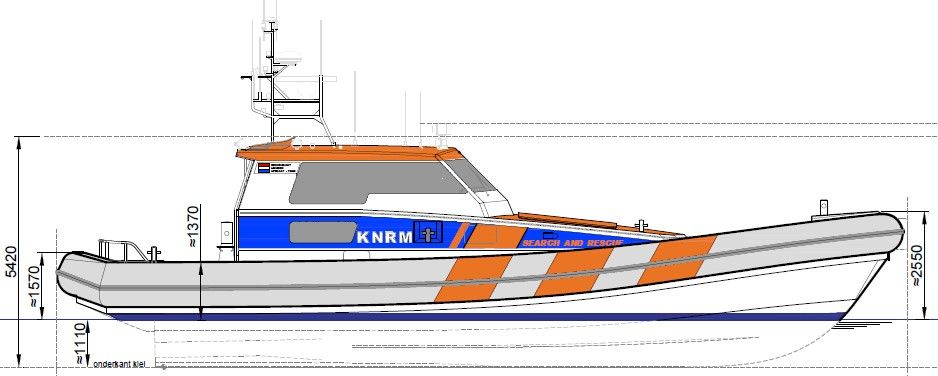
‘I am very proud that, after years of planning, the construction of this hull marks the tangible start of building the first all-weather lifeboat of this new class,’ says Jacob Tas, Director of the KNRM. ‘This is a major responsibility, as these vessels will enable the KNRM’s volunteer rescuers to save people and animals in all weather conditions, while ensuring that they can put to sea and return safely.’
The name Prins Johan Friso was unveiled by His Majesty King Willem-Alexander in 2024, during the KNRM’s 200th anniversary celebrations.
Thirteen lifeboats for the Dutch coast
On 15 November 2025, the KNRM commissioned the construction of thirteen new lifeboats. The rescue organisation had never before placed such a large order with a shipyard.
Eleven lifeboats are destined for KNRM rescue stations in Eemshaven, Schiermonnikoog, Ameland, Terschelling, Vlieland, Den Helder, Scheveningen, Hoek van Holland, Stellendam, Neeltje Jans and Breskens. The other two will join the reserve fleet and be deployed when other lifeboats are temporarily taken out of service for maintenance.
Also read: KNRM places largest newbuild order ever
KNRM to replace all 75 lifeboats by 2035
With a fleet of 75 lifeboats stationed along the Dutch coast, the KNRM is available around the clock for emergencies at sea and on larger inland waterways. The vessels range in length from 5 to more than 19 metres. Some can even operate in winds of up to Beaufort force 12. They must therefore meet the highest standards and remain in top condition.
Rescue services are provided free of charge and funded by donations from individuals, companies and charitable funds. The KNRM has been saving lives and providing assistance since 1824 without government subsidies, although it carries out its duties on behalf of the government.
The complete renewal of the fleet of 75 lifeboats by 2035 will cost EUR 120 million. Donors and benefactors have already pledged almost seventy per cent of this amount. The KNRM still needs to raise the remaining thirty per cent and is confident that it will find the necessary donors in the coming years.
Picture: Following extensive preparations, drawings and calculations, the first components of the new KNRM lifeboat are being assembled at Bloemsma Aluminiumbouw (photo Roel Ovinge).
Also read: King unveils name newest KNRM boat: Prins Johan Friso