According to the jury, Casper Versteylen is bringing the energy transition in the shipping industry a step closer by combining materials science expertise with practical experiments. He won the Maritime Talent Award for his efforts.
Among other things, he is investigating the implications of new energy sources such as methanol, ammonia, hydrogen and LNG for the steel used on board ships. He is also applying his expertise to the potential use of on-board nuclear installations.
This is versatile and relevant research that contributes to the future of the maritime sector, the jury states.
Removing barriers to the use of alternative fuels on ships
Versteylen combined his expertise in materials science with practical experiments. This is relevant because, in many cases, structures are exposed to chemical environments that fall outside the design specifications and established experience.
To overcome regulatory and technical barriers, Versteylen is conducting research into, amongst other things, the corrosion of steel in methanol, the fatigue properties of steel under the influence of hydrogen, and its susceptibility to stress corrosion cracking under the influence of ammonia. In addition, drawing on his previous expertise, he is working on the introduction of nuclear installations on board ships.
The significance of the research lies in removing barriers to the use of alternative fuels on board ships. This is necessary to identify and mitigate potential showstoppers.
Existing knowledge from other sectors and the literature is of essential importance in this regard. He draws on previous experience with qualification within the nuclear sector and from materials science research to form the basis of his approach. A unique aspect is the use of broad experience both within and outside TNO, and the identification and mitigation of the most significant barriers through practical tests.
Also read: Maritime Talent Award winner improves dredging pipelines
Other nominees
The other two nominees for the Maritime Talent Award were:
- Stijn de Vries has developed a method, experimental setup and a product to seal underwater cables for wind turbines more quickly, cheaply and reliably. The solution is now being used on board ships, and a patent has been applied for in respect of the sealing system.
- Rik Baltussen has developed an autonomous system for damage analysis above the waterline. This innovation makes it possible to create a digital replica of damage at sea using drones and photogrammetry and to share this directly with the shore-based organisation, saving time and money.
Last night, 2 November, the Maritime Awards Gala took place at ORYN, Hilversum, the Netherlands. As has become common practice, five awards were presented. The Maritime Ship of the Year Award, Maritime Achievement Award, Maritime Innovation Award, Maritime Talent Award and Maritime Security Award.
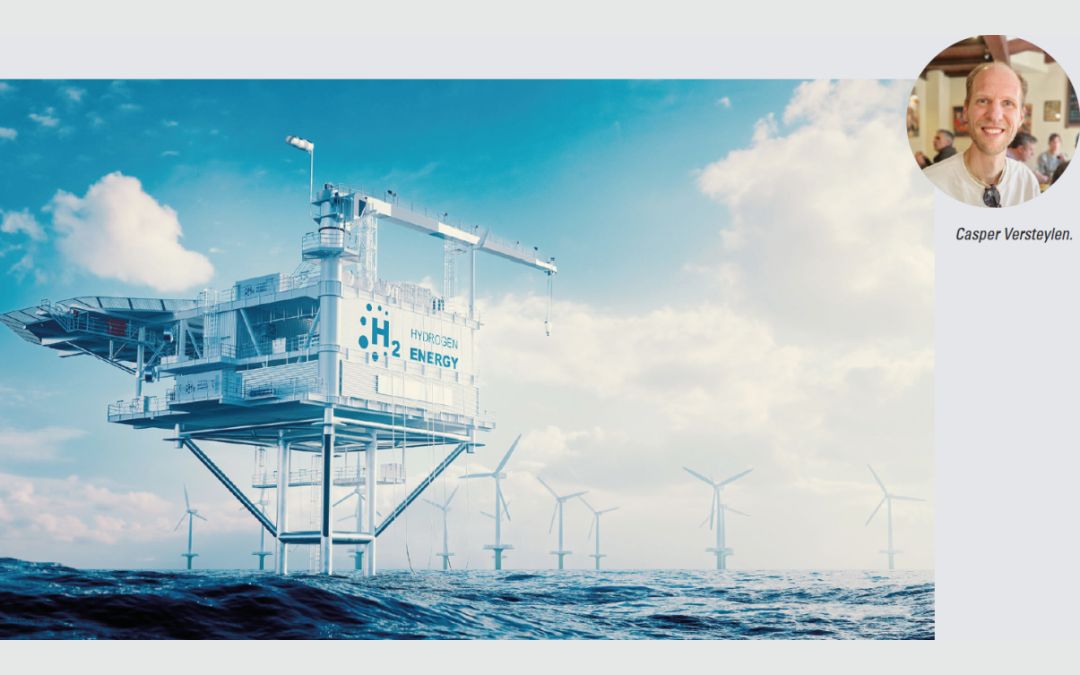
Picture: The concept of offshore hydrogen production through a hydrogen platform in combination with an offshore wind farm with Casper Versteylen on the right (photo Maritime Awards Gala Foundation/award winner).
Also read: And the 2026 Maritime Awards nominees are…