In his PhD research into the protection of the Dutch merchant fleet between 1935 and 1991, LTZ1 dr. Matthijs Ooms links lessons from the past to current issues surrounding trade security and geopolitical tensions. It landed him the Maritime Achievement Award at the Maritime Awards Gala last night.
The jury particularly appreciates the way in which he translates historical insights into today’s policy. His research demonstrates how important effective cooperation between the government, the navy and shipowners is for the protection of our merchant fleet.
Trade protection research
The historical doctoral research project “Trade Protection” analyses a highly topical issue: the protection of merchant ships against violence at sea. Trade protection is a complex issue, both conceptually, in terms of military strategy and in terms of policy. This research demonstrates that understanding this complexity and strengthening the relationships between the government, the navy and shipowners are crucial for effective protection.
The Second World War taught costly lessons in trade protection, lessons that were literally paid for with the lives of tens of thousands of seafarers. Close cooperation between the government, the navy and shipowners proved essential. But during the Cold War, this cooperation repeatedly broke down due to conflicting interests, scarce resources and mutual misunderstanding.
The study strengthens the Netherlands’ capacity for maritime innovation by exposing the structural lack of cohesion between the navy, the government and shipowners in the field of trade protection. The research offers concrete historical lessons and a clear analytical framework for breaking this pattern. In doing so, it provides directly applicable insights for policy, strategy and civil-military cooperation, particularly at a time when secure maritime supply lines and geopolitical tensions are once again taking centre stage.
This pioneering work is the first in-depth study of the complex relationship between the navy, the government and the merchant navy during the Cold War. Its added value lies in linking historical insights with contemporary policy and strategy, thereby creating a concrete frame of reference for the sector and the government. The research offers important lessons for improving policy-making and preventing the repetition of mistakes. Completed with admirable perseverance, this work stimulates the necessary debate on our national maritime resilience.
Also read: RMI teacher bags Maritime Achievement Award
Other nominees
In addition to Ooms, two others were nominated for the award. The first was the OTR:MMP Pre-Master’s Programme. This programme was developed to give seafarers with MBO4 qualifications, who do not hold a formal higher professional education (HBO) degree, access to the HBO Master’s programme leading to registration as a pilot. This required a change in the law, and a one-year part-time programme was set up, aimed at developing HBO-level skills whilst working at sea. The first intake in 2025-2026 was successful, and the next intake will follow in 2027-2028.
Final nominee was WISTA Netherlands. WISTA The Netherlands is a networking organisation dedicated to raising the profile and advancing the careers of women in the maritime sector, where they remain under-represented. Through networking and the promotion of leadership, the organisation contributes to making better use of talent and to strengthening recruitment and retention.
Last night, 2 November, the Maritime Awards Gala took place at ORYN, Hilversum, the Netherlands. As has become common practice, five awards were presented. The Maritime Ship of the Year Award, Maritime Achievement Award, Maritime Innovation Award, Maritime Talent Award and Maritime Security Award.
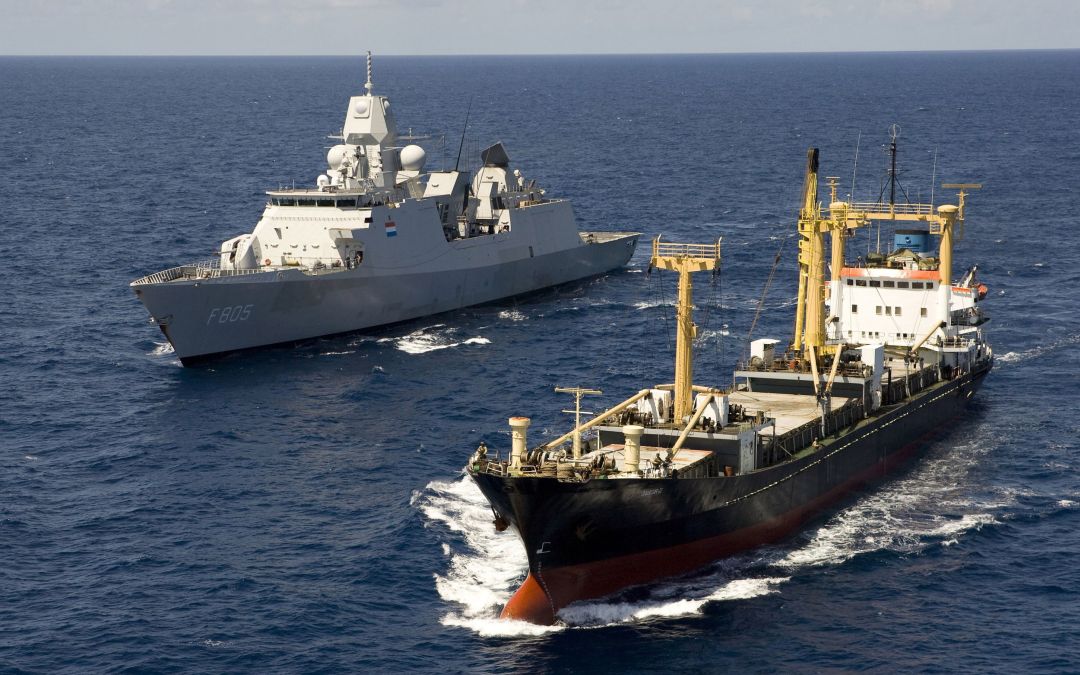
Picture: Closer cooperation between government, navy and shipowners is essential when maritime supply lines and geopolitical tensions take centre stage (photo Maritime Awards Gala Foundation/award winner).
Also read: And the 2026 Maritime Awards nominees are…