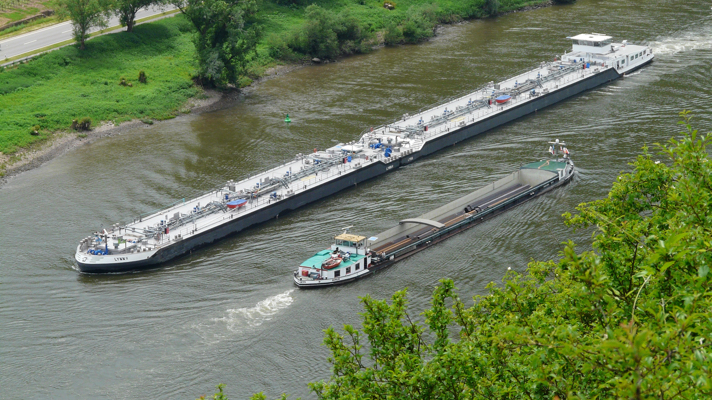
Inland shipping transport from Delfzijl to Rotterdam sailing on green hydrogen instead of gas oil; this is being investigated by Chemiebedrijf Nouryon, inland shipping cooperative NPRC and an individual ship owner. They want to demonstrate that zero-emission transport by water is possible.
'Hydrogen as a fuel is still more expensive than other fuels,' says inland shipping entrepreneur Harm Lenten of NPRC member Lenten Scheepvaart, 'but as the technology develops, this is becoming more and more attractive and that is what makes this first step so important.'
Locally Produced Green Hydrogen
To start, the feasibility of an inland navigation vessel that can run on one hundred per cent green hydrogen is being investigated. The green hydrogen is produced locally by Nouryon using sustainable electricity. The intention is to have the ship Antonie, owned by Lenten Scheepvaart BV, transport salt from Nouryon's salt factory in Delfzijl to the Botlek in Rotterdam within a few years.
No Emissions but Water
Hydrogen is safer than LNG and can be treated largely in the same way. This fuel is widely available in Delfzijl and Rotterdam, is completely clean and emits no CO2. The only emission is water. The hope is that if the forthcoming trial is successful, more ships will start using hydrogen.
Hydrogen Coalition and Green Deal
This step is part of a broader so-called Hydrogen Coalition for Inland Navigation, in which shippers and inland shipping cooperatives PTC and NPRC are committed to making the transport chain more sustainable. In addition to hydrogen, biofuels, clean internal combustion engines and electrification of ships are also being investigated.
The initiative of the hydrogen fuelled ship is also part of the "Green Deal" of Minister van Nieuwenhuizen of Infrastructure and Water Management, which is full of initiatives to make water transport as emission-free as possible. The Minister has made fifteen million euros available to the inland shipping sector to stimulate innovation.
Picture: Waterborne transport per tonne of weight transported over a kilometre is more sustainable than all other forms of transport.